Public Symposium on Microchimerism 2026

It is our pleasure to announce the 

Public Symposium on Microchimerism

on May 26, 2026,

in the beautiful city of Graz.

Registration for this Symposium is free of charge, but helps us to improve our planning.


Hosting cells that are not your own

Microchimerism is one of biology’s most fascinating and little-known phenomena: the long-term of cells presence in our tissues that come from other bodies. During pregnancy, cells are exchanged between mother and children. Astonishingly, this cellular ballet is no pas de deux featuring just mother and fetus. It extends over several generations. Siblings can play a role, even a vanishing twin. (During pregnancy, mother’s and baby’s cells traffic to each other and remain in the other’s body for decades — or possibly our entire lives. We are truly connected to our children and our parents.)

But… ?

But what are these cells doing in our bodies? Do they randomly settle in this or that organ?
Could they change our identity? Can we use them as therapeutic tools?

What to expect!

Learn about ongoing research into how microchimerism affects our health and why it may have evolved in all mammals.
Hear the story of microchimerism from science writer and book author Lise Barnéoud, who wrote the first popular book on microchimerism, “Hidden Guests.”
Meet speakers and international experts in the microchimerism field.

On behalf of the Microchimerism Consortium and the Scientific Advisory Board, we would like to welcome you all to Graz.
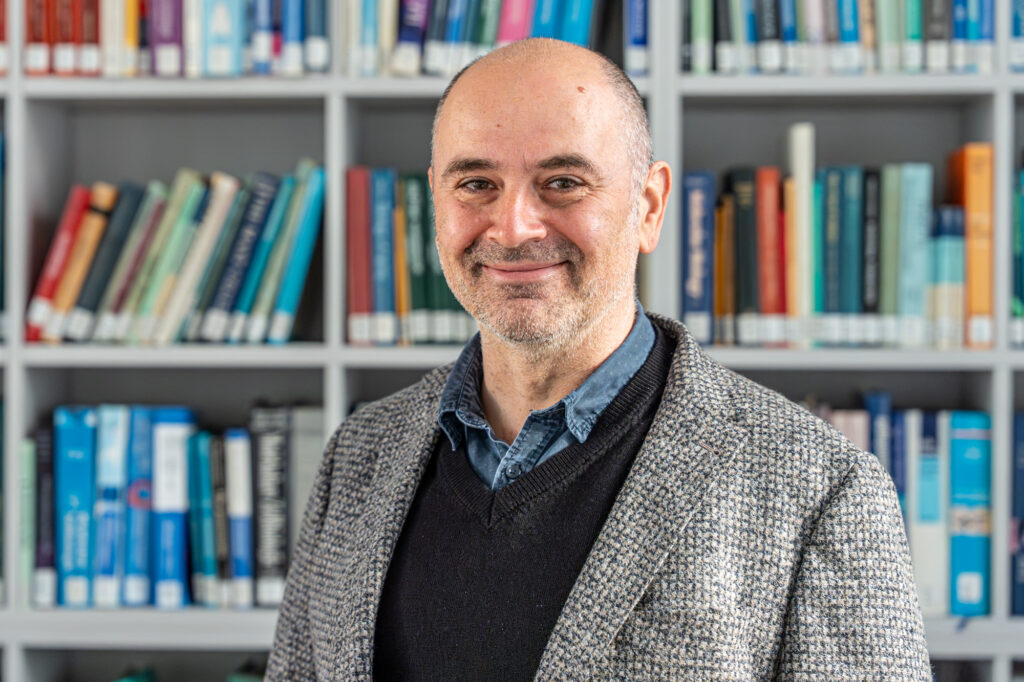
Thomas Kroneis
Conference President

For your inspiration

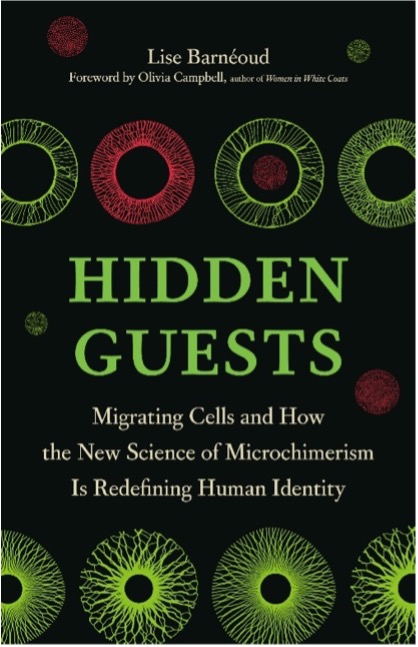
Hidden Guests

Migrating Cells and How the New Science of Microchimerism Is Redefining Human Identity

By Lise Barnéoud
ISBN: 978-1-77840-266-1
Pub date: 6 November 2025
Hardcover
£18.99 UK
5.5” x 8.5” • 200 pages
eBook available

Hidden Guests

Migrating Cells and How the New Science of Microchimerism Is Redefining Human Identity

LISE BARNÉOUD

Foreword by Olivia Campbell
Translated by Bronwyn Haslam

What if some of your cells were not your own? A captivating and thought-provoking exploration of the fascinating scientific phenomenon of microchimerism…

IN HIDDEN GUESTS, science journalist Lise Barnéoud explores the emerging science of microchimerism: the presence of genetically distinct cells that originated in another person. How did a mother give birth to the genetic children of her “sister” who was never born? How was a man identified by DNA testing as the culprit of a crime he didn’t commit? How might you be carrying cells from your relatives or even strangers?

A fascinating book… Hidden guests, ably translated from French by Bronwyn Haslam, is more lyrical than narrative. [Ms Barnéoud] ruminates on how microchimerism might change the understanding of ourselves”, Sam Kean, Wall Street Journal

Weaving cutting-edge science, mysterious true stories, and interviews with experts at the forefront of the research, Barnéoud asks philosophical and probing questions about the implications of microchimerism for our understanding of immunity, biology, evolution, and notions of individual identity.

LISE BARNÉOUD is a freelance science journalist who regularly contributes to Mediapart, Science et Vie and Le Monde. She is the author of Immunisés? and Vaccins, petit guide par temps de Covid.

She was elected « French Science Writer of the year » in 2017 and won several awards (Fondation Varenne award for science journalism; Trophées Signatures Santé…).

OLIVIA CAMPBELL who has written the foreword is a journalist and the New York Times bestselling  author of Women in White Coats and Sisters in Science.

LEE NELSON, MD who has written the afterword published some of the first scientific studies on microchimerism in the 1990s. She heads the Nelson Lab at the Fred Hutchinson Cancer Center in Seattle, where her team investigates the health consequences of microchimerism.

LISE BARNÉOUD

Accreditation for Journalists

We appreciate your interest in reporting on our congress. To obtain accreditation as a journalist, please submit the following documentation: A valid press card from a recognised journalists' association may be added as supporting documentation. Do you have examples of regular, topic-related publications? We reserve the right to review each accreditation request individually. Thank you for your understanding and cooperation.