
Microchimerism and Autoimmunity: Genetic Risk, Immune Recognition, and Familial Context
Microchimerism questions the concept of autoimmunity adding an alloimmunity aspect to it as persistent, genetically distinct cells from mothers, offspring, and siblings also contribute to our immune networks. With epidemiologic data scientists try to understand the link of fetal- and male-origin microchimerism with diseases such as rheumatoid arthritis and type 1 diabetes that often reveal dose-response pattern suggesting that these rare cells may function as genetic risk modifiers or biomarkers, particularly within specific familial HLA constellations. Experimental models point to microchimeric cells from distinct sources as contributing to autoantibody production and inflammatory pathology. At the population level, efforts to identify predictors of maternal and male-origin microchimerism investigate the complexity of the associations with host and maternal factors. This session covers genetic epidemiology, immunopathogenesis, and family-based analyses to reexamine autoimmune disease through the lens of intergenerational cellular exchange.
Thursday, 28.05.2026, Day 2
Time: 11:00-12:30
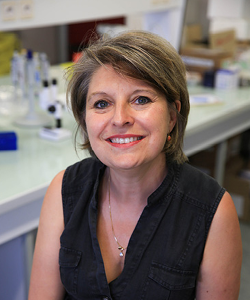
Could Cells from Our Mother, Children, and/or Siblings Participate in Immune Reactions Mistakenly Labeled as Autoimmunity?
Nathalie C. Lambert
INSERM UMRs 1097 Arthritides, Microchimerism and Inflammations (ARTHEMIS), Aix Marseille University, Marseille, France
The idea that semi-allogeneic cells resulting from feto-maternal exchanges might play a role in autoimmune diseases was first suggested in 1893, when a German pathologist, Georg Schmorl, discovered fetal placental cells in the lungs of mothers who had died of eclampsia. A century later, in 1996, J. Lee Nelson revisited this hypothesis, asking whether autoimmune diseases might in fact be semi-alloimmune in nature. She sparked interest by demonstrating that the peripheral blood of women with scleroderma more frequently and abundantly contained male cells—presumed to be of fetal origin—than that of age- and pregnancy-matched controls. This phenomenon, known as fetal microchimerism (Mc), became the focus of extensive correlation studies linking Mc levels to various autoimmune conditions.
But does the mere presence of these cells in higher quantities among patients truly establish their causal role in disease? Could other cells arising from placental exchanges participate also ? Do maternal, fetal and sibling microchimeric cells exert pathogenic effects only within specific genetic contexts in families?
In a cohort of patients with rheumatoid arthritis, we have recently identified specific genetic patterns across three generations that may influence the levels of microchimerism. We, along with others, have shown that microchimerism can represent a genetic risk factor for developing the disease in hosts who do not carry a known predisposition. Finally, using a mouse model, we have analyzed the ability of different microchimeric sources to produce autoantibodies and to contribute to pathogenesis. Does this represent a worrying biological phenomenon—or, conversely, an exciting therapeutic opportunity?

Cellector: A tool to detect foreign genotype cells in scRNAseq data with applications in leukemia and microchimerism.
Haynes Heaton
Haynes Heaton1,†,*, Reza Behboudi1,†, Colin Ward1, Minindu Weerakoon1, Sami Kanaan2, Skylar Reichle1, Nathan Hunter1, Scott Furlan2,3
1 Auburn University, Auburn, AL 36849
2 Fred Hutchison Cancer Center
3 Seattle Childrens Hospital, Department of Pediatrics
†These authors contributed equally to this work
* Correspondence: haynesheaton@auburn.edu
The existence of rare, genetically distinct cells can occur in various samples such as transplant patient samples, naturally occurring microchimerism between maternal and fetal tissues, and cancer samples with sufficient mutational burden. Computational methods for detecting these foreign cells are vital to studying these biological conditions. An application that is of particular interest is that of leukemia patients post hematopoietic cell transplant (HCT). In many leukemias, a primary therapy is HCT, after which, the primary genotype of the bone marrow and blood cells should be of donor origin. If cells exist that are of the patient’s genotype and the cell type lineage of the particular leukemia, this is known as measurable residual disease (MRD). If the MRD is high enough, this may represent a relapse of the patient’s leukemia. Furthermore, accurately estimating the MRD is important for driving clinical decision making for these patients. Using high throughput single cell RNAseq (scRNA-seq) such as drop-seq1, 10x Genomics2, Seq-Well3, InDrops4 among others, one can use the expressed genetic variants in the RNAseq reads to detect microchimeric cells. Unlike multiplexed single cell experiments, one cannot biochemically tag these cells for demultiplexing5,6. Tools made for demultiplexing cells by genotype such as souporcell7,8, vireo9, and scSplit10 rely on clustering based systems that don’t perform well with highly skewed cluster sizes, which microchimerism has by definition. Other tools such as Demuxlet11 require knowledge of the genotypes up front which may be costly, not possible, or unavailable. Here we present Cellector, a computational method for identifying rare foreign genotype cells in single cell RNAseq (scRNAseq) datasets. Cellector uses a sparse beta-binomial anomaly detection method to identify cells with different genotypes than the majority of the sample. We show cellector accurately detects microchimeric cells down to an exceedingly low percentage of these cells present (0.05% or lower) even when the cells come from related individuals which represent the most common donors for HCT.
Cellector is freely available under an MIT open-source license at https://github.com/wheaton5/cellector.

Circulating male origin microchimerism in Danish girls with and without type 1 diabetes
Gitte L. Petersen, Msc, PhD
Researcher, Translational Type 1 Diabetes Research, Steno Diabetes Center Copenhagen, Herlev, Denmark
Assistant Professor, Section of Epidemiology, Department of Public Health, University of Copenhagen, Denmark
Gitte Lindved Petersen (1, 2), Sofie Dolores Holm Müller (3), Christina Ellervik (4, 5, 6), Randi Jepsen (7), Marianne Antonius Jakobsen (3), Mads Kamper-Jørgensen (2), Flemming Pociot (1)
(1) Department of Translational Type 1 Diabetes Research, Steno Diabetes Center Copenhagen, Denmark
(2) Section of Epidemiology, Department of Public Health, University of Copenhagen, Denmark
(3) Department of Clinical Immunology, Odense University Hospital, Denmark
(4) Boston Children’s Hospital, Harvard Medical School, Boston, Massachusetts, USA
(5) Department of Clinical Medicine, University of Copenhagen, Denmark
(6) Department of Clinical Biochemistry, Zealand University Hospital, Køge, Denmark
(7) Center for Health Research, Zealand University Hospital, Nykøbing F., Denmark
Presenting author: Gitte Lindved Petersen, MSc, PhD
Male origin microchimerism (MOMc) has been associated with autoimmune disease in women. While typically attributed to prior male pregnancy, MOMc is not confined to parous women as 14% of nulliparous Danish girls have detectable MOMc in their circulation. We investigated whether MOMc is associated with type 1 diabetes (T1D) in Danish girls.
Our study population includes 34 female cases with T1D sampled from the Danish Registry of Childhood and Adolescent Diabetes and 262 female controls without T1D from the Lolland‑Falster Health Study. DNA purified from buffy coat was screened for the multi‑copy Y chromosome‑specific gene DYS14 using quantitative PCR, yielding binary indicators of MOMc presence and estimated cell quantities in genomic equivalents (GE)/100,000 GEs screened. The MOMc levels were categorized as 0, >0 to <1, and ≥1 GEs/100,000 GEs. T1D-associated genetic variants and covariates from nationwide registers are being obtained through ongoing linkage at Statistics Denmark.
MOMc was detected in 50% of girls with T1D (17/34) and 21% of controls (54/262). Among girls with vs. without T1D, 24% vs. 15% carried >0 to <1 MOMc GEs, and 27% vs. 5% carried ≥1 MOMc GEs. Crude logistic regression showed that the MOMc-positive girls had an odds ratio (OR) of T1D of 3.85 (95% confidence interval (CI): 1.84–8.09) compared with MOMc-negative girls. Compared to MOMc-negative girls, those with >0 to <1 MOMc GEs had an OR of T1D of 2.39 (95% CI: 0.92-5.76), and those with ≥1 MOMc GEs had an OR of 8.47 (95% CI: 3.11-22.68).
Detectable MOMc in peripheral blood was associated with higher odds of T1D in girls, with evidence of a dose-response pattern. If this is not due to confounding or selection bias, circulating MOMc may represent a potential biomarker of T1D. Ongoing analyses will assess the roles of T1D-associated genetic risk and other covariates.
Biosketch
Dr. Petersen completed her BSc in Public Health Science at the University of Southern Denmark, followed by a MSc in Public Health Science and a PhD in Public Health and Epidemiology at the University of Copenhagen.
Her research focuses on how non‑inherited foreign cells, known as microchimerism, shape health trajectories in children and women. Working from an epidemiologic perspective, she investigates predictors of maternal and male microchimerism and examines their potential implications for type 1 diabetes, other autoimmune diseases, infections, and longevity.
Her work integrates diverse observational data sources, including biological samples, surveys and interviews, and nationwide registers, applied across a range of epidemiologic study designs. Through this approach, she studies the presence, origins, and consequences of microchimerism at the population level.
https://www.sdcc.dk/english/research/researchers/pages/gitte-lindved-petersen.aspx

Predictors of maternal and male-origin microchimerism in peripheral blood of Danish youths.
Tine Dreier Bille
Tine Dreier Billea,*, Flemming Pociota, Randi Jepsenb, Christina Ellervikc,d,e, Sofie Dolores Holm Müllerf, Marianne Antonius Jakobsenf, Gitte Lindved Petersena,e
a Department of Clinical and Translational Research, Steno Diabetes Center Copenhagen, 2730 Herlev, Denmark
b Centre for Health Research, Zealand University Hospital, Nykøbing F., 4800 Nykøbing F., Denmark
c Boston Children’s Hospital, Harvard Medical School, Boston, Massachusetts, USA
d Department of Clinical Medicine, University of Copenhagen, 2200 København N, Denmark.
e Department of Clinical Biochemistry, Zealand University Hospital, Køge, Denmark
f Department of Clinical Immunology, Odense University Hospital, 5000 Odense C, Denmark.
e Section of Epidemiology, Department of Public Health, University of Copenhagen, 1353 Copenhagen, Denmark.
* Presenting author
Abstract
Identifying predictors of maternal (MMc) and male-origin microchimerism (MOMc) is key to understanding potential links to health outcomes. We examined predictors of MMc and MOMc in peripheral blood of Danish youths aged 15-20 years and assessed their associations.
We included 501 mother-offspring pairs from the Lolland-Falster Health Study (2016-2020). Survey, biochemical, and nationwide register data were linked via personal identification numbers. Information covered maternal factors (maternal age, educational level, spontaneous abortions, parity, smoking, hypertension, preeclampsia, accreta, gestational diabetes, autoimmune disease, asthma, caesarean section, preterm birth, and birth weight), and youth factors (baseline age, sex, asthma, tobacco use, and biochemical measurements (iron, creatinine, glucose, haemoglobin, lipids, thyrotropin, thyroxin, triiodothyronine, and albumin)). DNA purified from buffy coat was analyzed for MMc in offspring via autosomal indels. Females were also screened for MOMc using the Y-chromosome marker DYS14. Predictors were explored using Random Forest, followed by logistic regression to assess associations.
MMc was detected in 17.4% of youths (80/461) and MOMc in 20.5% of the female youths (54/263). For MMc, Random Forest ranked youth factors as stronger predictors than maternal factors, with asthma notably influential, though the odds ratio was 2.51 [95% CI 0.95–6.22]. For MOMc, maternal smoking and educational level were most important. The odds ratio for smoking before vs. during pregnancy was 2.35 [95% CI 1.05-5.25], while medium vs. primary education yielded an odds ratio of 0.84 [95% CI 0.49-1.43]. No other predictors or associations were identified.
Overall, youth factors, particularly asthma, predicted MMc more accurately than maternal factors. All the potential MOMc predictors tested were inconsistent and uncertain. Despite the breadth of the available data, we identified no robust predictors or associations for MMc or MOMc.
Biosketch
Tine Dreier Bille holds a MSc in Public Health Science from the University of Copenhagen and currently works as a Research Assistant in the Translational Type 1 Diabetes Research group at Steno Diabetes Center Copenhagen. She uses observational data sources, including biological samples, surveys, and nationwide registers. She applies epidemiological methods such as target trial emulation and machine learning to research questions in diabetes, autoimmune disease, and microchimerism.